


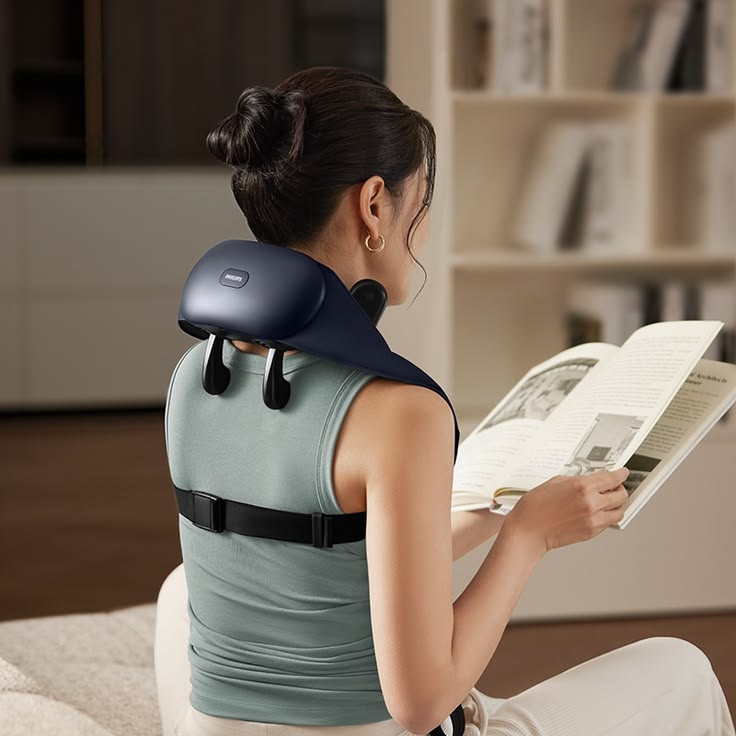
The hand-simulated massager market in 2025 has become more advanced—and more confusing—than ever. With claims like “4D kneading,” “real-touch fingers,” and “intelligent pressure adaptation,” it is easy to assume every device delivers similar results. In reality, performance varies significantly depending on engineering quality, motor system, ergonomics, and material design.
A smart buying decision requires looking beyond marketing language and focusing on what actually affects long-term comfort, durability, and pain relief.
What Defines a High-Quality Hand-Simulated Massager in 2026
Not all massagers labeled “Hand Simulated Neck shoulder massager” truly replicate human touch. The best models share a few key technical characteristics.
1. True Multi-Dimensional Kneading Motion
High-end devices use rotating or oscillating nodes that mimic:
- Thumb pressure
- Palm compression
- Circular kneading motion
Lower-end models often rely on simple vibration, which is less effective for deep muscle relief.
2. Adaptive Pressure Control
The most advanced devices adjust pressure based on:
- Muscle resistance
- User-selected intensity
- Internal motor feedback systems
This prevents both under-stimulation and excessive force.
3. Heat Integration
Thermal systems improve:
- Muscle flexibility
- Blood circulation
- Deep tissue penetration
Heat is now a baseline feature in competitive mid-to-high-tier models.
4. Ergonomic Fit
A properly shaped massager ensures consistent contact with:
- Neck curve
- Shoulder slope
- Upper trapezius area
Poor fit reduces effectiveness even if motor quality is strong.
Key Categories of Hand-Simulated Massagers
Understanding categories helps investors and buyers evaluate value more clearly.
1. Entry-Level Kneading Massagers
These typically offer:
- Basic rotating nodes
- Limited speed settings
- Minimal customization
Strengths
- Affordable
- Easy to use
- Suitable for light tension
Weaknesses
- Limited durability
- Less realistic motion
- Basic comfort level
2. Mid-Range Real-Touch Devices
This is the most competitive category in 2026.
Features
- 4D or variable-speed kneading
- Heat therapy
- Adjustable intensity
- Improved ergonomic design
Why They Stand Out
They balance performance and affordability, making them ideal for daily users.
3. Premium Intelligent Systems
High-end models focus on realism and adaptability.
Features
- Multi-directional kneading systems
- Brushless motors for smooth motion (Ava’s Review)
- Advanced pressure control
- Cordless operation with long battery life
Advantage
They deliver the closest experience to professional massage therapy at home.
What Actually Impacts Pain Relief Performance
Marketing often emphasizes features, but real effectiveness depends on a few core mechanics.
1. Motor Quality (The Core Engine)
Brushless motors are increasingly standard in premium devices because they provide:
- Smoother motion
- Lower noise
- More consistent torque
This directly affects how “human-like” the massage feels.
2. Node Design and Depth
Deep, rounded nodes mimic thumb pressure better than flat or rigid surfaces.
Why It Matters
Deeper penetration improves relief for:
- Chronic neck tension
- Shoulder knots
- Trapezius stiffness
3. Motion Variability
Human massage is not repetitive. Devices with changing rhythm and speed feel more natural and effective.
4. Heat Distribution Quality
Even heat spread is more important than maximum temperature. Poor heat design reduces comfort and consistency.
What Experts Look For in 2026 Buying Tests
Independent reviews and testing trends highlight consistent evaluation criteria:
- Comfort over time
- Ease of use
- Effectiveness on real muscle tension
- Safety features
- Build quality and durability (Consumer Reports)
Many testers emphasize that no device fully replaces manual therapy, but good massagers significantly reduce daily muscle discomfort when used correctly.
Smart Investment Criteria for Buyers
If you are evaluating a hand-simulated massager as a long-term investment, focus on these factors:
1. Durability Over Flashy Features
Look for:
- Strong motor housing
- Quality stitching or casing
- Reliable heat system
2. Consistent Performance
Avoid models that feel powerful at first but weaken over time.
3. Ergonomic Fit Quality
A well-designed shape often matters more than extra massage modes.
4. Realistic Motion Design
Prioritize kneading realism over vibration intensity.
5. Battery and Portability (If Cordless)
For wireless models, battery stability is crucial for daily use.
Common Buyer Mistakes in 2026
Focusing Only on Intensity
More force does not always mean better relief. Over-intensity can cause discomfort.
Ignoring Fit and Shape
A poorly aligned device reduces effectiveness regardless of motor quality.
Overvaluing Mode Count
More modes do not equal better massage quality.
Skipping Comfort Testing (Conceptually)
Many users choose based on specs rather than how the device actually feels in use.
The Future of Hand-Simulated Massage Technology
The next phase of development is moving toward:
- Smarter pressure adaptation
- Improved anatomical mapping
- More realistic hand-like motion cycles
- Better energy efficiency in brushless systems
- Enhanced thermal integration
The focus is shifting from “more features” to “more realism.”
Final Thoughts
The best hand-simulated massagers of 2026 are defined less by flashy marketing and more by engineering quality. Brushless motors, adaptive pressure systems, realistic node design, and ergonomic structure are the true indicators of value.
For buyers and long-term users, the smartest investment is not the device with the most modes or highest intensity—but the one that consistently delivers smooth, natural, and reliable relief that closely mimics real human touch. When chosen wisely, these devices become practical daily tools for managing modern neck and shoulder strain.
